Not one disease.
Many different conditions.

The term "neuropathy" describes nerve damage - but which nerves, how many, and what caused the damage shapes everything about your experience. Understanding your specific type is the first step toward the right treatment.

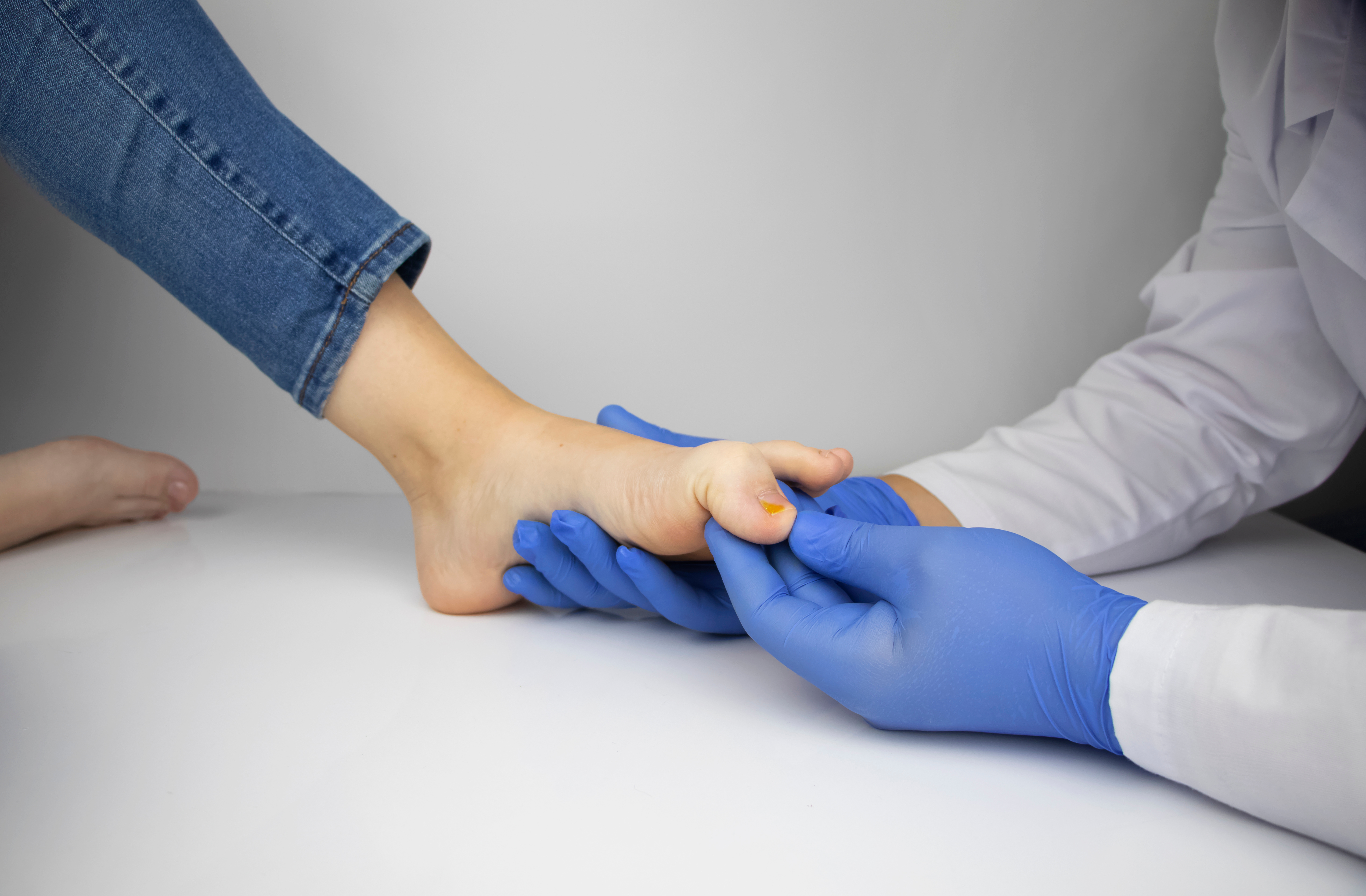
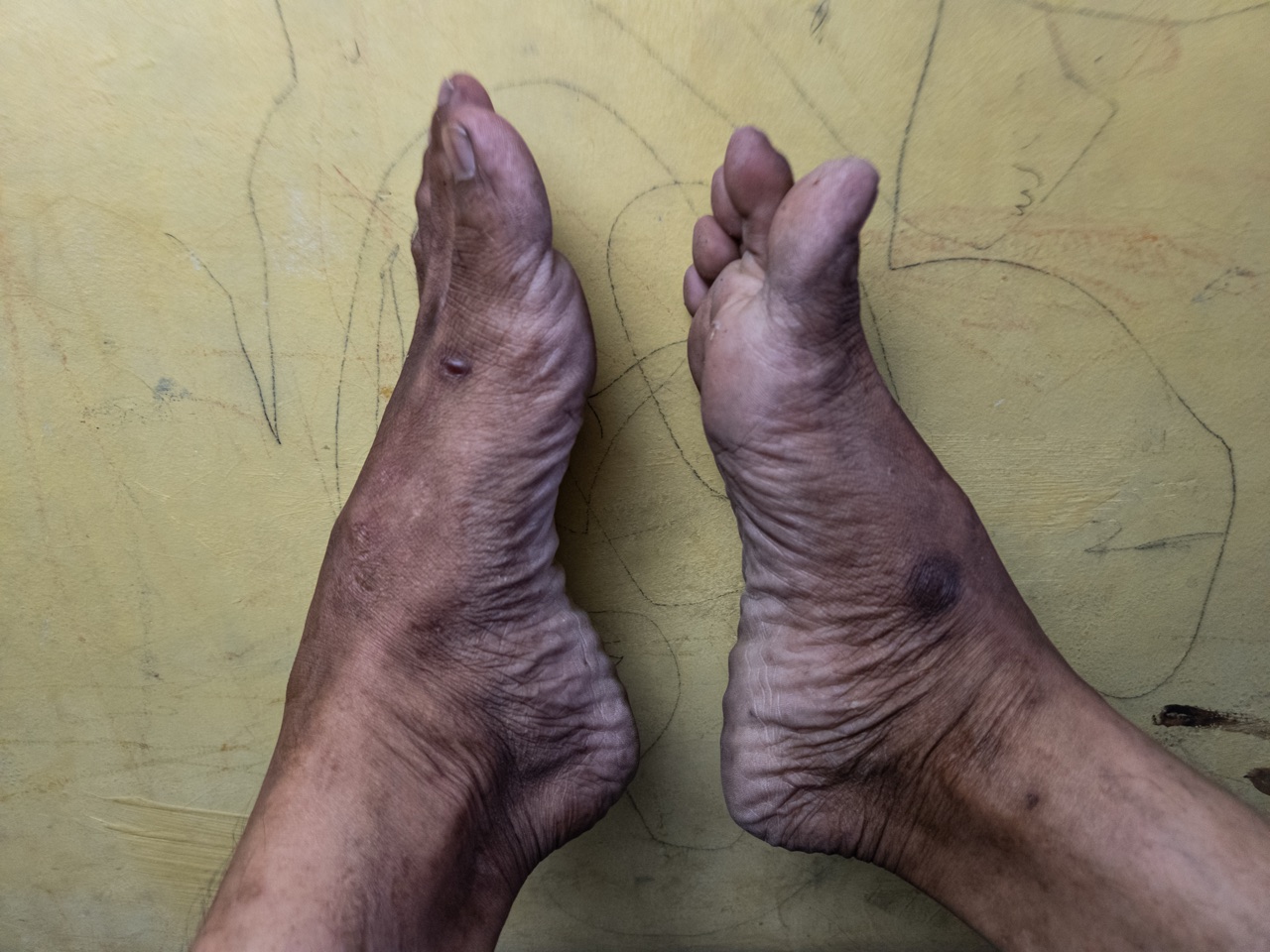
Close-up of feet and ankles, representing peripheral neuropathy symptoms
Primarily affects
Feet · Ankles · Hands · Lower legs
01
Most Common Form

Peripheral Neuropathy

Peripheral neuropathy is the umbrella term for damage to the peripheral nerves - the vast network that extends from your spinal cord into your limbs, organs, and skin. It's by far the most common type, affecting over 20 million Americans.

The hallmark is a length-dependent pattern: the longest nerves in the body are affected first, which is why symptoms almost always start in the feet and toes before progressing upward. This "stocking and glove" distribution is a classic diagnostic clue.

Sensory Motor Sensorimotor Length-dependent

Sensory peripheral neuropathy produces tingling, burning, and numbness. Motor involvement causes muscle weakness and balance problems. Most people develop a mixed sensorimotor pattern over time.

50%
of diabetics develop peripheral neuropathy
20M+
Americans currently affected
Doctor discussing autonomic symptoms with a patient
Affects
Heart · Gut · Bladder · Sweat glands · Eyes
02
Often Overlooked

Autonomic Neuropathy

Autonomic nerves control the body's involuntary functions - heartbeat, digestion, blood pressure, bladder control, and sweating. When these nerves are damaged, the consequences are wide-ranging and often misattributed to other conditions.

Orthostatic hypotension (a dramatic drop in blood pressure upon standing) is one of the most disabling symptoms, causing dizziness and fainting. Diabetic autonomic neuropathy is the most common form, and it significantly increases the risk of sudden cardiac death.

Cardiovascular Gastrointestinal Urogenital Sudomotor

Gastroparesis (delayed stomach emptying), sexual dysfunction, and anhidrosis (inability to sweat) are common manifestations. Autonomic neuropathy is often present alongside peripheral neuropathy in diabetic patients.

54%
of type 2 diabetics have some autonomic involvement
higher cardiac mortality risk
Person struggling with balance and leg strength in physical therapy
Affects
Hips · Thighs · Buttocks · Shoulders
03
Often Confused with Arthritis

Proximal Neuropathy

Proximal neuropathy is the opposite of length-dependent peripheral neuropathy - it strikes the roots of the limbs rather than the extremities. Also called diabetic amyotrophy or Bruns-Garland syndrome, it typically causes severe, sudden-onset pain in one hip, thigh, or buttock.

Unlike peripheral neuropathy's gradual creep, proximal neuropathy can appear almost overnight. The pain is frequently described as stabbing or aching at night, followed by significant muscle weakness and wasting in the upper leg. Many patients have difficulty rising from a seated position or climbing stairs.

Diabetic Amyotrophy Lumbosacral Plexopathy Asymmetric

The good news: with aggressive blood sugar control and physical therapy, proximal neuropathy often improves significantly over 6-18 months - making early recognition critical.

1%
of diabetics develop proximal neuropathy
6-18
months typical recovery timeline
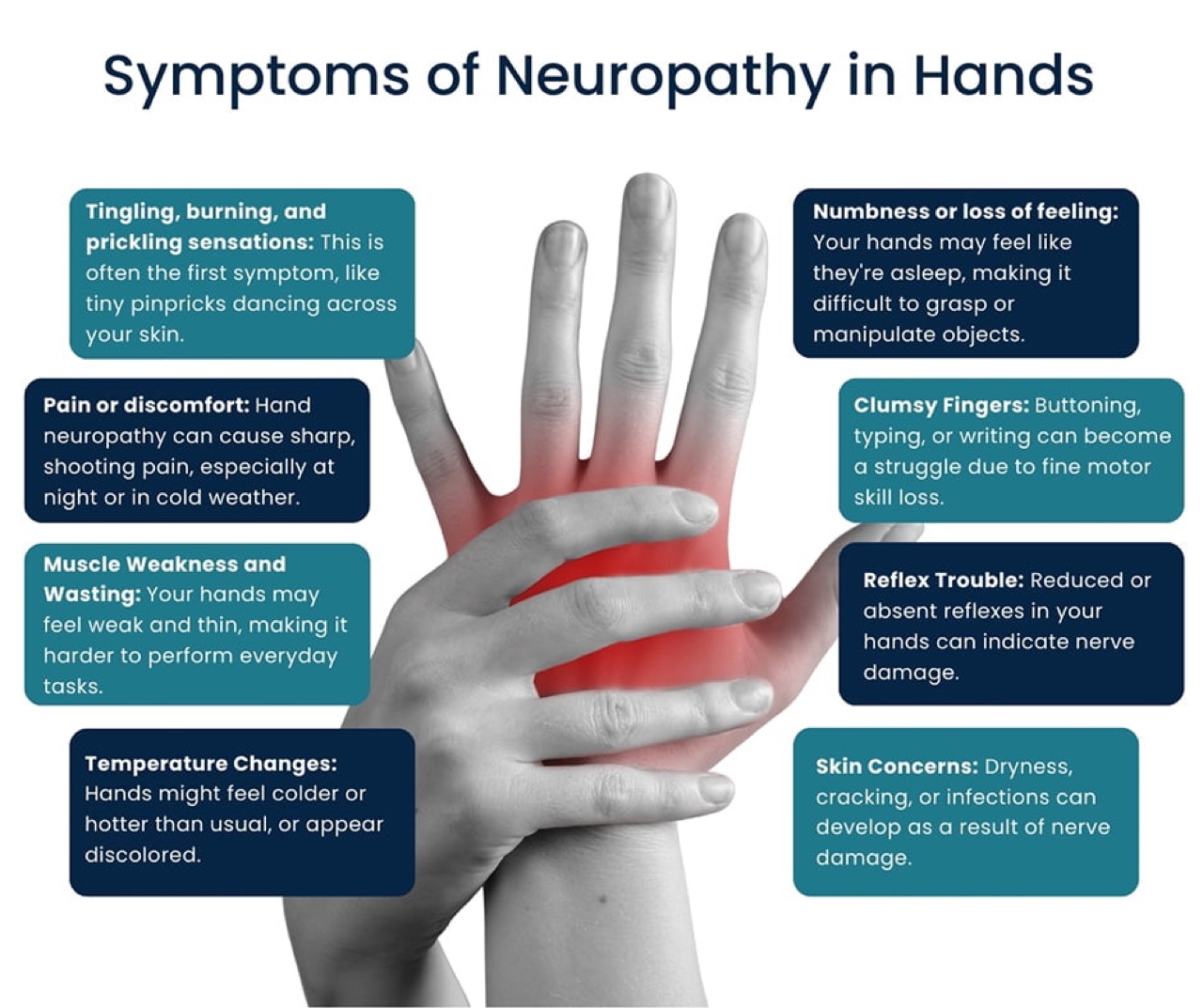
Hand with symptoms of carpal tunnel syndrome and focal neuropathy
Type 04

Focal Neuropathy & Mononeuropathy

Focal neuropathy involves damage to a single nerve or nerve group - often from compression, trauma, or a sudden vascular event that cuts off blood supply to a nerve. Unlike the diffuse types above, focal neuropathy is highly localized and typically produces very specific symptoms in a defined region.

Carpal tunnel syndrome - the most common focal neuropathy - compresses the median nerve at the wrist, causing hand pain, numbness, and weakness. Peroneal nerve palsy (foot drop) can occur from prolonged leg crossing. Cranial neuropathies are a special subcategory affecting the nerves of the face and head.

  • Carpal tunnel syndrome (median nerve) - numbness, tingling, grip weakness
  • Ulnar neuropathy (cubital tunnel) - ring and little finger numbness
  • Peroneal nerve palsy - foot drop, inability to lift the toes
  • Meralgia paresthetica - outer thigh burning from lateral femoral cutaneous nerve compression
  • Bell's palsy (facial nerve / CN VII) - sudden one-sided facial weakness
  • Trigeminal neuralgia (CN V) - severe facial pain triggered by light touch
  • Diabetic third nerve palsy (CN III) - sudden double vision and drooping eyelid
Understanding Nerve Fiber Types

Small Fiber vs. Large Fiber Neuropathy

Peripheral nerves contain different classes of fibers. Knowing which fiber type is affected explains why some people burn and feel pain acutely, while others go numb and lose balance without pain.

Feature Small Fiber Neuropathy (SFN) Large Fiber Neuropathy (LFN)
Fiber types affected A-delta and C fibers (unmyelinated / thinly myelinated) A-alpha and A-beta fibers (heavily myelinated)
Main function lost Pain and temperature sensation; autonomic regulation Vibration, proprioception, fine touch, motor strength
Pain level Often severe - burning, electric, hypersensitivity Less painful; predominant numbness and weakness
Balance problems Usually mild Often significant - sensory ataxia, falls risk
Nerve conduction study (NCS) Usually normal - NCS does not detect small fibers Abnormal - NCS directly measures large fibers
Best diagnostic test Skin punch biopsy (intraepidermal nerve fiber density) Nerve conduction study + electromyography (EMG)
Common causes Diabetes, Sjogren's, HIV, celiac disease, idiopathic Diabetes, CIDP, B12 deficiency, hereditary neuropathies
Autonomic involvement Common - sweating, blood pressure, digestion Uncommon unless combined with autonomic neuropathy

Important: Many people have mixed small and large fiber neuropathy, with symptoms from both columns. A normal nerve conduction study does NOT rule out neuropathy - it only rules out large fiber involvement. If your NCS was normal but you have burning pain, request a skin punch biopsy to evaluate small fibers.

Etiology

What causes neuropathy?

Over 100 different conditions can damage peripheral nerves. Identifying the cause is critical - many neuropathies improve substantially when the underlying condition is treated. Up to 46% of cases are idiopathic (no cause found), but a systematic evaluation should always be completed first.

  1. 1

    Diabetes Mellitus

    Chronically elevated blood sugar damages blood vessel walls, depriving nerves of oxygen and nutrients. Both type 1 and type 2 diabetes are implicated. Tight glycemic control is the most effective preventive and disease-modifying intervention.

    30-50% of all neuropathy cases
  2. 2

    Idiopathic (Unknown Cause)

    Despite thorough evaluation, 25-46% of peripheral neuropathy cases have no identifiable cause. Many of these may involve undetected metabolic abnormalities, genetic factors, or subclinical autoimmune processes. Research is ongoing.

    25-46% of cases
  3. 3

    Chemotherapy-Induced Peripheral Neuropathy (CIPN)

    Certain chemotherapy agents - particularly taxanes (paclitaxel), platinum compounds (cisplatin, oxaliplatin), and vinca alkaloids (vincristine) - are directly neurotoxic. CIPN affects up to 68% of cancer patients on these regimens and can persist long after treatment ends.

    Affects ~30-40% of chemo patients
  4. 4

    Alcohol-Related Neuropathy

    Both the direct toxic effect of alcohol on nerve tissue and alcohol-related nutritional deficiencies (thiamine / vitamin B1, B12, folate) contribute. Alcoholic neuropathy typically presents as a painful sensory neuropathy in the feet, often with autonomic features.

    ~25-66% of people with chronic alcohol use
  5. 5

    Autoimmune & Inflammatory Conditions

    The immune system can mistakenly attack peripheral nerves. Conditions include Guillain-Barré syndrome (acute), chronic inflammatory demyelinating polyneuropathy (CIDP), lupus, rheumatoid arthritis, Sjogren's syndrome, and vasculitic neuropathy. Many are treatable with immunotherapy.

    Significant subset; highly treatable
  6. 6

    Nutritional Deficiencies

    Vitamin B12 deficiency is among the most common and correctable causes of neuropathy. Deficiencies in B1 (thiamine), B6 (pyridoxine - note: excess B6 also causes neuropathy), copper, and vitamin E can all damage peripheral nerves. Bariatric surgery patients are at particular risk.

    B12 deficiency: affects up to 6% of adults under 60
  7. 7

    Hereditary Neuropathies (CMT)

    Charcot-Marie-Tooth disease is the most common inherited neurological disorder, affecting 1 in 2,500 people. It encompasses a family of genetic conditions causing progressive motor and sensory neuropathy. Symptoms typically begin in the feet and legs in adolescence or early adulthood.

    1 in 2,500 people affected

Know your type. Start your path.

Understanding which type of neuropathy you have - or suspect you have - is the first step toward proper diagnosis and treatment. The symptoms you're experiencing carry important diagnostic clues.

Frequently Asked Questions

Peripheral neuropathy affects sensory and motor nerves, typically in the hands and feet (stocking-glove pattern). Autonomic neuropathy damages the nerves controlling involuntary functions like heart rate, digestion, and blood pressure. Focal neuropathy affects a single nerve, often suddenly, causing weakness in specific areas like carpal tunnel syndrome or Bell's palsy.
Small fiber neuropathy (SFN) damages the thin nerve fibers that detect pain and temperature. Symptoms include burning pain, electric shock sensations, and heightened sensitivity. Standard nerve conduction studies may appear normal because they test large fibers. Diagnosis requires a skin punch biopsy to measure nerve fiber density. SFN is increasingly recognized as a distinct condition with its own treatment approaches.
CIPN is nerve damage caused by certain chemotherapy drugs, including platinum agents (cisplatin, oxaliplatin), taxanes (paclitaxel, docetaxel), and vinca alkaloids (vincristine). It affects 30-70% of patients receiving these drugs. Symptoms may appear during treatment or months afterward. Duloxetine is the only medication with strong evidence for treating established CIPN, according to ASCO guidelines.
Yes. Focal neuropathies affect individual nerves and can be one-sided. Examples include carpal tunnel syndrome (median nerve), ulnar neuropathy (elbow), and radiculopathy (nerve root compression). Proximal neuropathy, also called diabetic amyotrophy, typically starts on one side of the thigh, hip, or buttock before sometimes spreading to the other side.
Nerve Health AI
Neuropathy Specialist
Hello! I can help with your neuropathy questions. Ask me about symptoms, types, treatments, or daily management.